Prelude-
Thanks for coming and checking out my trip report. The text you find in blue was written from my journal while on the wall. The text in green is written as explanations to various climbing jargon for non-climbers. And the text in white is me talking now in the present, after having done the climb. If you are a climber reading this, I would suggest you simply skip past the green text. Some of the videos are short clips, and some of them are quite long. Aid climbing is like watching paint dry, and so if you aren’t super interested in the individual moves of the crux pitches, I might skip past and/or through those as well.
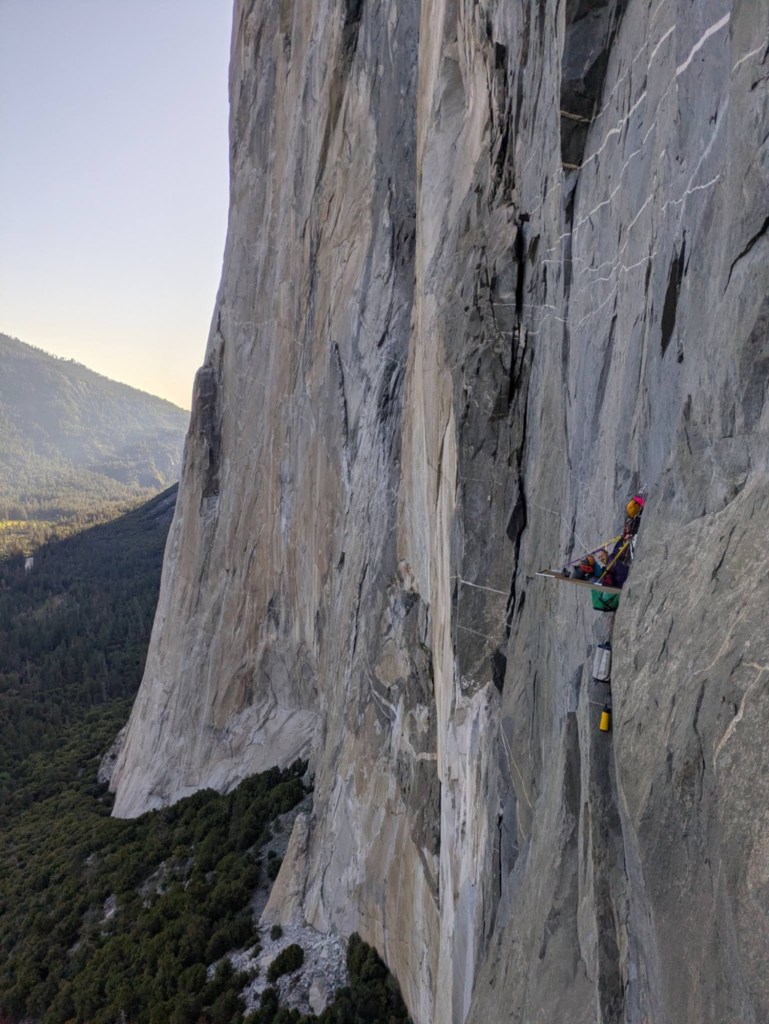
Climbing “solo” means I have no partner, but I do have the protection of a rope. Not to be confused with a “free solo”, which only one person has ever done on El Capitan. The solo process requires me to build an anchor and climb each pitch (100-200 sections of rock between anchors). I then rappel back down the pitch to the previous anchor, and then “jug” back up the rope. Jugging back up the rope is simply ascending the rope with teethed rope clamps. This process is known as “cleaning” the pitch, and is the method used to retrieve all of the gear I left in the rock to protect myself. Once back at the high point, I then “haul” the pitch. Hauling is the process of bringing all the gear from one anchor to the next. A pully system, that only feeds in one direction, is used and generally requires the person hauling to essentially squat the gear through the pulley. I used a 2:1 pulley system for the majority of this route. This makes the load half as heavy for me, but requires me to pull up twice as much rope.
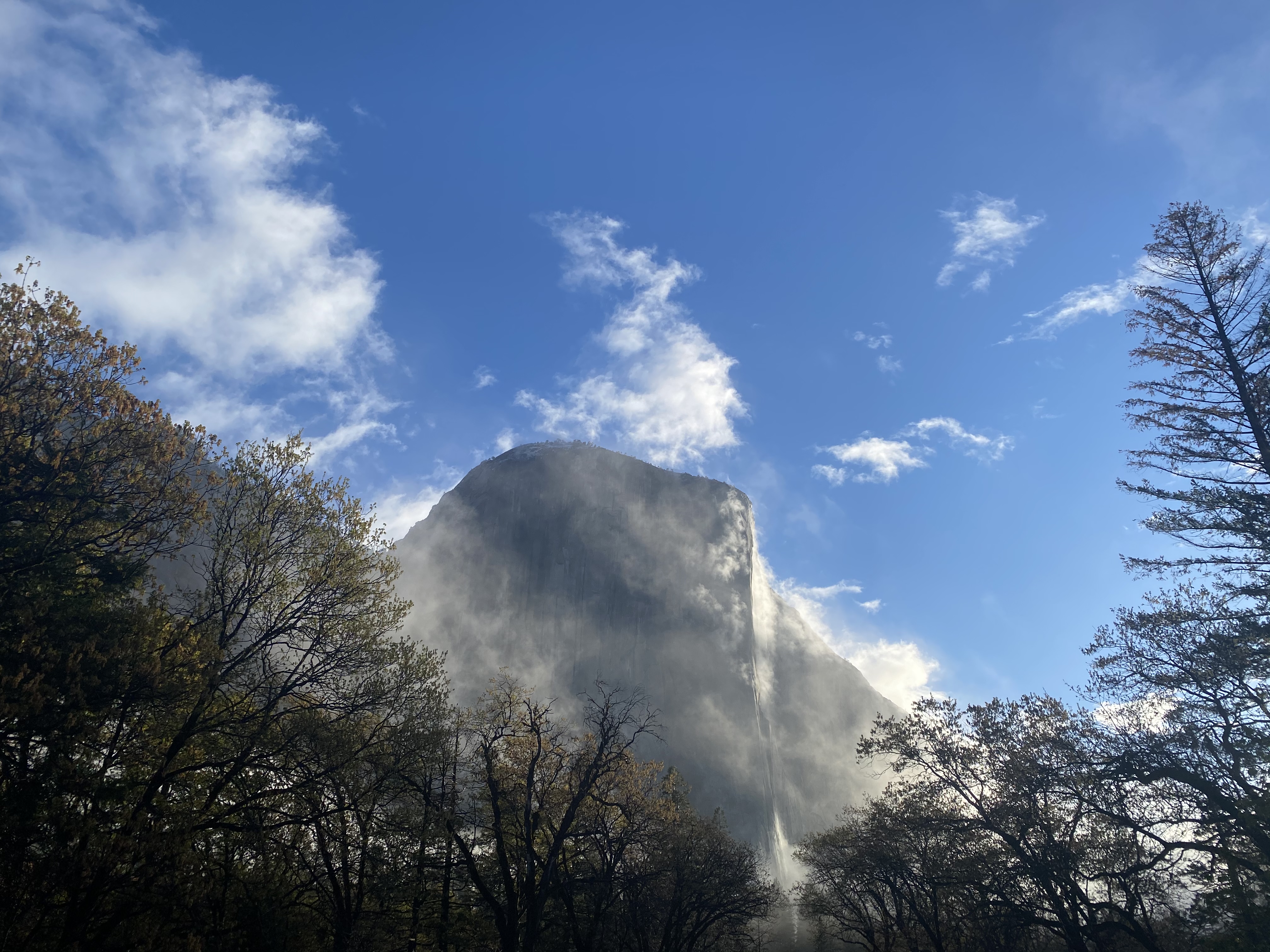
The shortest Straw is graded either A4- or A3+ depending on where you look (even in the guide book it lists both grades on different pages). I haven’t climbed either grade before so I don’t feel like I can honestly fairly give my opinion on the matter. It was the hardest and most dangerous thing I’ve done for sure. It is a 12 pitch route that ends with the last 3 pitches of Zodiac (which I climbed at C3?) for a total of 15 pitches. While one of the shortest route on El Capitan, it is incredibly steep and intimidating with consistent difficulties. The day before I started up the wall Oliver Tippet and his partner Taylor Martin set the speed record on the route, doing it in just under 10 hours. I was close behind them with a staggering 12 nights spent on the wall. I was trying to get less night on the wall than they had hours, but alas, I’m not quite there yet.
Aid routes are graded either A1-A5 or C1-C4. The A simply means that a hammer is used and the C (clean) means no hammer is used. A1 or C1 is the easiest grade and meas that every piece you place will hold a fall. Whereas A5 is the hardest grade and generally means that a large series of pieces will only hold body weight, not a fall. A5 generally means that a fall in the wrong place would be catastrophic and would lead to serious death or injury.
Thursday 5/14 – Hiking loads up
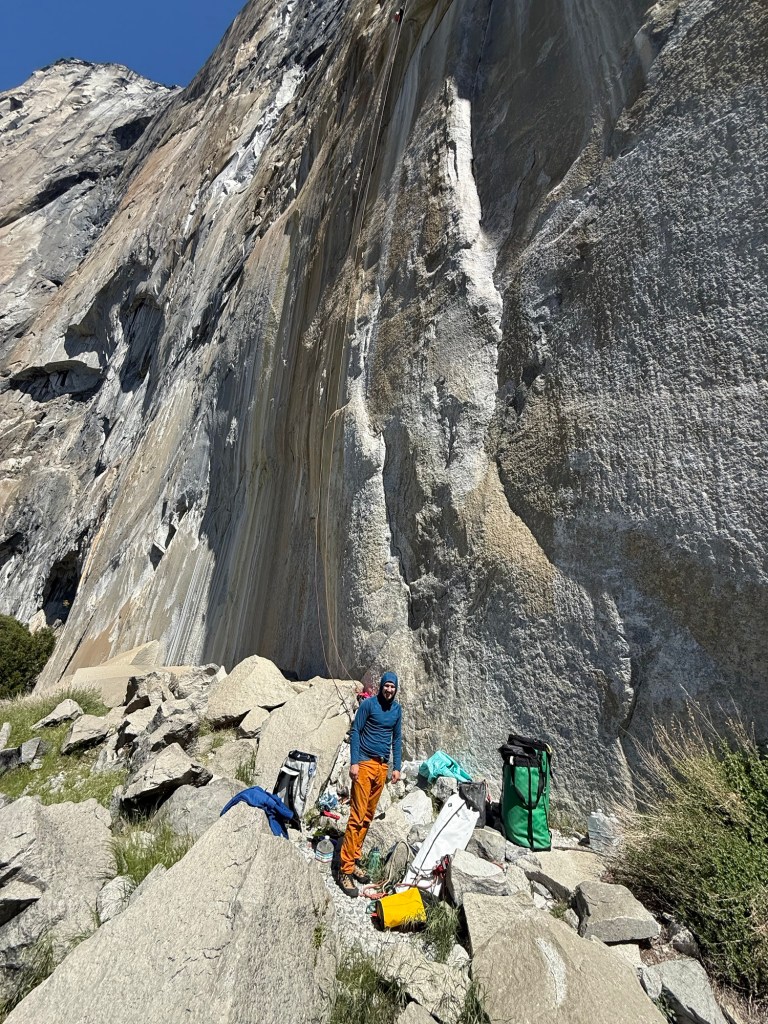
I arrived in the valley on Thursday May 14, 2026 and got straight to work, hiking up the first of several loads to the base of the wall. On the way down I ended up running into my old friend Bailey who I had climbed Skull Queen with back in the spring of 2024. If I recall correctly, that was his first successful wall. Perhaps I’m wrong about that. He’s been on an absolute tear since then. He was going for his 11th ascent of El Cap, and as I’m writing this he has just completed his 12th. We spent some time catching up and I learned that Bailey now lived in the Valley full time, giving up his big boy job to be able to climb more. I am definitely not jealous, I love my job, and wouldn’t leave it for anything. But sometimes I do wonder what I could accomplish if I could devote more time to The Valley.
Bailey was fixed to the top of the third pitch on Mescalito. He would also be climbing solo about a half mile away from where I would be climbing. I would be able to see him and follow his progress as I climbed. Bailey mentioned wishing he could join me for The Straw. I wrote the following in my journal that night: “I thought about inviting him. Felt bad that I didn’t. It would be more fun. It would go faster. I would have more time to get more routes done. But it felt like bailing on myself. I want to solo it. To prove I can still do it. I’ve never felt as good, or as accomplished, as when I soloed The Muir. I want that feeling again. To feel truly great at something. Andy K once told me he wished he could solo The Captain again for the first time. Is that how I’ll feel? Like its not as good as the first time? probably.”
Friday 5/15 – Fixed Pitch 1
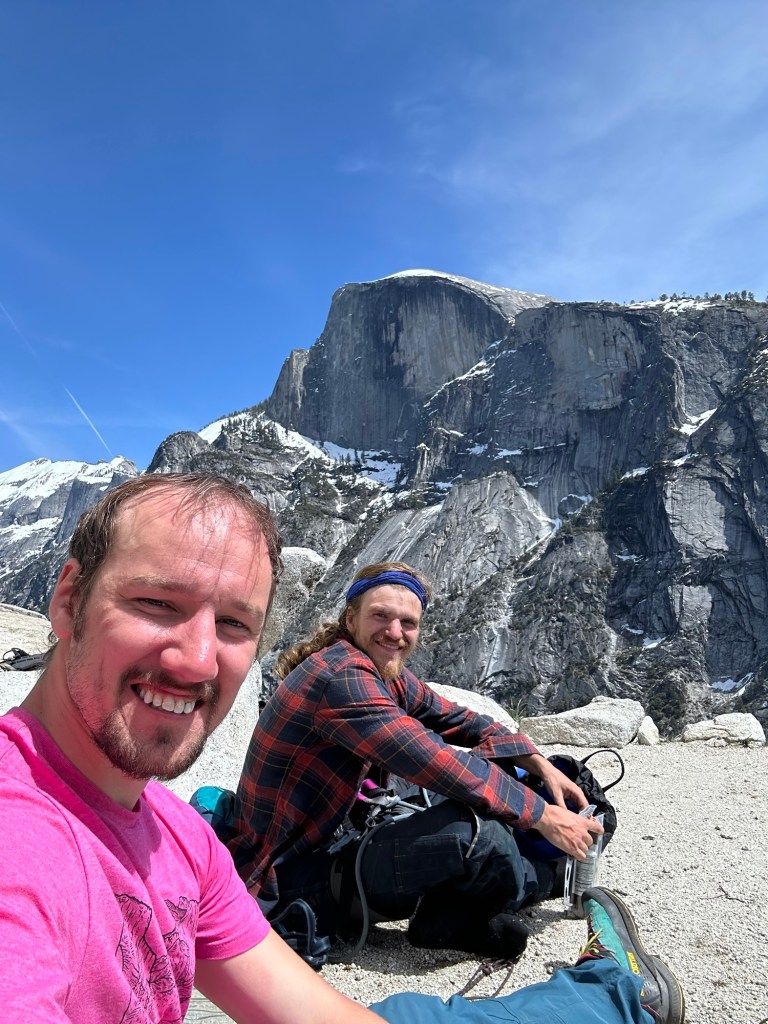
The next day I woke up and met up with another friend of mine, Timmy, who I met on Zodiac in the fall of 2024. He was dirt-bagging in the valley and so I offered him some money to bring a load of gear up to the base for me. As he put it I was “feeding the wild life.” I was also able to get all of my water from horsetail falls, just to the right of my route, which saved me from having to hike up 80 lbs of water. I was bringing 10 gallons for a planned ascent of 10 days. I’m chronically dehydrated, and don’t drink that much water, so realistically that would get me through more days than that if it was needed. I chose to then climb and fix the first pitch. A note for non climbers, “fixing” means to leave the rope attached to the anchor and ascent the rope back to the high point at a later time.
” It’s fucking nails. I might be in over my head. Will I have enough beaks? The hooking was tricky. Used the big hook twice; was good but had to place it blindly. Think I’m over-driving the beaks. Had to use the funk tool to get them all out. Spent 4 hours on lead. Jesus. Mountain Project calls this the warmup pitch. I nailed more on this pitch then I ever have in all my climbing combined. Lots of hooks too. Beaks and hooks are what I came for I guess. Very tired. This will be very challenging.”
Beaks are Pitons (metal “spikes) that slot into very small cracks/seams in the rock. You can just put them in by hand, but generally you hammer them into the rock with a hammer. A hook is a piece of metal that grabs onto the outside of the rock at irregularities or protrusions, but generally aren’t able to be left to protect you once you move past that piece. A “funk tool” is a a piece of metal that helps to remove Pitons that are difficult to remove from the rock.
Saturday 5/16 – Hauling
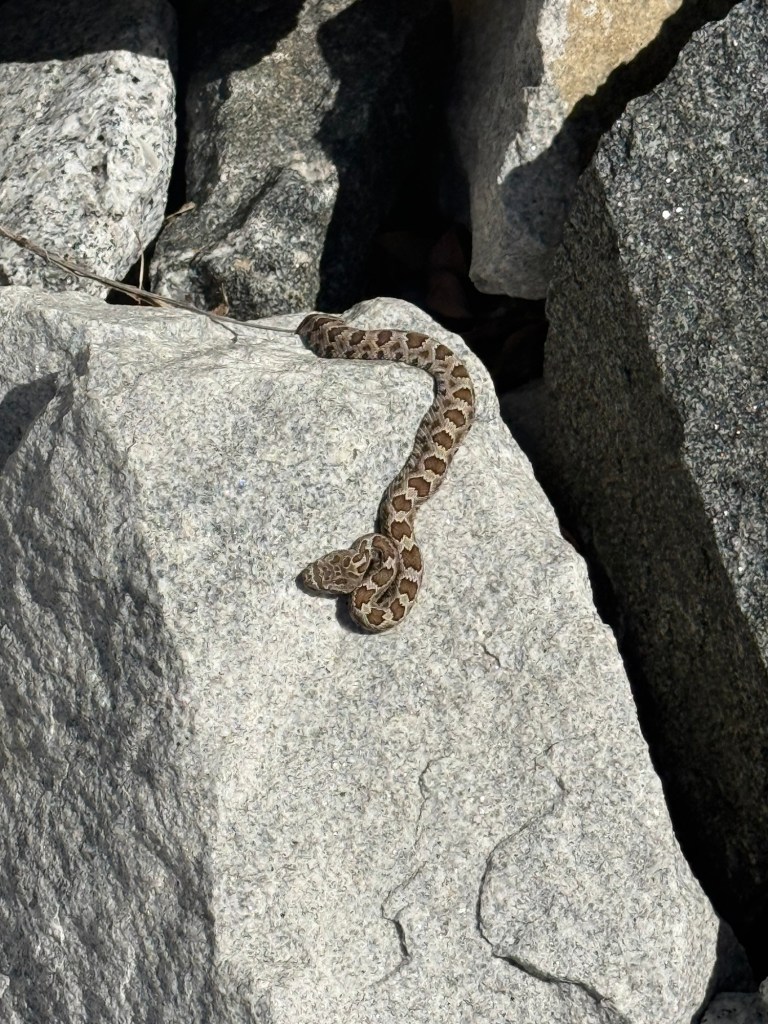
“3 Fucking rattlesnakes today. 1 rattled at me. I had stepped over a rock he was under. He was well within striking range, but treated me well. Hiked up the ledge and food and hauled P1. Going to commit to the wall tomorrow. Did some biking later in the day. Went to Curry and got a shower. Should have rested the legs, but the shower was nice. Excited for tomorrow. Weather looks good. A little nervous about time (I’m very slow), but it will be ok, so long as the water lasts and the weather holds.“ As you’ll read later, the weather did not hold.
Sunday 5/17 – Pitch 2/ windstorm
My recollection of Pitch 2 is minimal to none. It must have been pretty chill. What I do remember from this day was what happened that night “Last night was treacherous. There’s a waterfall that hits my ledge periodically. I couldn’t find my bivy sack, which I think is buried at the bottom of the large haul bag. By the time I realized I needed the rain fly, a massive windstorm had come. This was not in the forecast. Wind gusts up to 50 MPH til 2 in the morning. The wind lifted the ledge completely into the air, with me still in it, and then dropped us back towards the earth. Gravity is a motherfucker. I was saved by the anchor and somehow wasn’t dropped out of the ledge itself. I didn’t sleep much, spending my time thinking about rocks in hopes to be heavier when the wind gusts came. I did manage to get the fly to lay over my upper half, which was good because when the wind finally left, the waterfall returned. I awoke to a soaked sleeping bag and a very slow start to the day.”
Monday 5/18- Journey Through The Brain
This pitch was one of the primary reasons I chose this route. I am drawn to named pitches. Who isn’t? If they’re worthy enough to get a cool name, it must be a good pitch of climbing. I had rappelled past this pitch in the fall of 2024 when fixing pitches on Zodiac. I remember looking at it and scoffing, telling myself I would never climb something this hard. When I got down from the wall several people asked about the brain. In hindsight, my response is laughable. I said it was chill, and not a big deal. Something told me that probably wasn’t true, and my memory had changed the experience once it was over. It was almost two weeks later that I would be on the ground. I returned to my journal to remind myself of the original experience.
“I have completed the Journey Through The Brain, a pitch that has consumed my mind for too long. It was hard. Mentally. I took a fall on it, but not in the dangerous section. A beak pulled and I fell maybe 10 feet with stretch. Caught by a purple totem. It was a lot of hooking and from the 2nd move of the pitch I was scared and thinking about bailing. My mind frustrates me. The pitch is fittingly named.
When I am here I am scared and want to be home with Maria. Sometimes I dream of kids and giving up climbing hard dangerous routes. When I’m not here its the only thing I want to do. Go climb El Cap. Go solo a wall. Why? When I’m on the wall alone the moments of true joy are rare and fleeting. I know this, and yet I continue to let it consume me. Why?”
A “totem” is a camming device often referred to as a “cam”. This is the most common kind of protection in climbing (aside from a bolt), as well as the most secure and easiest to place. Cams generally require bigger cracks and are less common on harder routes such as this one. On easier routes, you often only place cams, and don’t even bring a hammer.
The pitch itself was wonderful. The second move was hidden until I got high in my ladders, but then it showed itself. The climbing that’s actually in the “brain” part of the rock is not too bad. There are some fixed pieces and even a cam or two to be placed. Once out of the brain the hooking gets a little more serious, but again, all of the hooks are good. The end of the pitch is A2 and as previously mentioned, I did take a small fall after poorly placing a beak.
“Once I completed the Journey Through The Brain, I really should have cleaned and hauled the pitch. But alas, my brain was fried. So I set up camp beneath the waterfall again. This time I pre-deployed the rain fly. Tomorrow I have to clean and haul to start the morning. Then on to pitch 4, which looks much easier. I’m moving at a glacial pace. I already want to be done. My mind screams at me to bail while I still can. But then what? Be a failure again? Wish I could say I was having fun. Who does this for vacation?”
Tuesday 5/19- Pitch 4
“Today has been a good day. I think I’ve recovered mentally. That’s why it’s always best to sleep on it and not bail the second the idea enters your fragile mind. Pitch 4 was pretty chill. Quite enjoyable. The ending was a little tricky with a few beaks placed around a corner. Tomorrow’s pitch is another crux of the route. Maybe even THE crux? The rock is shit and it looks slightly confusing to navigate. I’m not too stressed about it right now. Maybe I will be when I’m actually in the choss. Completed my lead today in under 2 hours. Felt good about that. Definitely had time to lead pitch 5, but chose to set up camp and chill instead. Hope tomorrow goes ok.”
A “crux” simply refers to the hardest part of a given route. When there are multiple cruxes its simply pointing out the sections that standout as the most difficult. “Choss” is a term used to reference poor rock quality. Loose and/or hollow rock that is believed to be minimally attached to the wall.
Wednesday 5/20- Pitch 5 crux
” I’ve had an amazing day today. I climbed the second crux, which most people seemed to think was THE crux of the whole route. The first 50 feet or so was a massive choss pile, however I only used nuts, no cams, and felt pretty confident that nothing was going to rip. The last 15 feet or so was tricky getting to the rivet. I don’t know if what I did is standard, and am actually pretty sure it isn’t. I did a tension traverse to the left just after a fixed piece. From there some spicy, and natural, hooking moves saw me to the rivet. Definitely not what the topo shows, but it looked best to me, and it got me out of the choss for a bit. After the rivet it was mostly over.”
A nut is just a piece of metal that gets slotted into the rock. It does not move at all, and therefore only pulls down, not out on the rock. They should be slotted into constrictions where they physically cant come out of the rock when pulled down. A rivet is a small “bolt” in the wall. They are much weaker than standard bolts. They are cheaper and quicker to place in the rock, so they are often used to connect features in blank sections of rock. Lastly, a tension traverse is when you lower down and use the rope above you to move sideways across the rock, typically to a new feature/crack system.
I had my first major hiccup of the route making a bit of a silly mistake. I have been using the back of my lead line to tag a bag up. This allows me to avoid having to carry my hauling equipment, haul line, and other miscellaneous gear that I think I won’t need, but might need, during the pitch. I accidentally left it partially clipped to the anchor and couldn’t pull it up. The pitch was too long and I wasn’t able to make it to the anchor without running out of rope. This required me to build an anchor mid pitch to go down and fix the problem. I began thinking of the guys at work telling me to Lock the fuck In.
“This bivy (top of 5) is awesome. There’s a little foot ledge you can traverse across that allows you to really spread out. Luxurious on this route. I did not think I was going to succeed 2 days ago, but now I’m nearly certain I will. This has been challenging, and it’s going slow, but I feel great about my effort and my abilities. I am behind schedule (though I think I have enough supplies to simply continue doing 1 pitch a day).” Pitch 7 looks outrageous from down here. Hopefully looks are deceiving.
Friday 5/21- Pitch 7
Didn’t write yesterday because I was too upset. Didn’t get 2 pitches done, which is not why I was upset. I’m pretty resigned to 1 pitch a day. I have enough supplies (I think?) I’ll combine 11/12 and then 14/15. I also think I can do the 3 zodiac pitches at the top in a push.
The reason I was so upset was I spent what felt like 3 hours fiddle-fucking with my ledge fly. I can get the ledge set up no problem, but when I introduce the fly, I just can’t get it right. Very frustrating. I briefly contemplated finishing on zodiac, but almost immediately discarded that idea. I am doing the Straw, but I am afraid of Sun and Steel (the penultimate pitch of the route). I’m afraid of breaking a rivet, and subsequently the route. I really have no business being up here with out the ability to replace rivets.
Anyways, today was a fantastic day. Did pitch 7 and really enjoyed it. The climbing in the beginning of the pitch especially. A little bit of spooky hooking, and then a moment of doom. My tag bag got stuck again. I think the rope just got caught on something. The topo called this pitch 130 feet, which meant I did not have enough rope to make it to the anchor without bringing the tag bag up to me. I eye balled how far I had to go and how much rope was left and I bet on myself that I could get the rope to the anchor. I really did not want to rappel on a couple of rivets. I won that bet and just barely made it to the anchor with just a small amount of rope to spare. Fuck Yes.
I had to rappel and jug back up twice, but with the elation of actually rappelling on the anchors, and not the rivets, I didn’t mind too much. This bivy spot is awesome. “Welcome Home Ledge”. I think Ill just climb pitch 8 tomorrow and come right back here to sleep again. Pitch 8 honestly looks pretty chill. Tomorrow should be a relaxed day. Hopefully I didn’t just jinx myself. I hope I can finally leave the fly off tonight. I want to see the stars.
Saturday 5/23- Pitch 8
Pretty chill day today. Didn’t bother getting out of bed til 930. Partially due to the constant drip. I’m right below the main roof that leaking. In the middle of the night I pulled the fly out and just half-assed deployed it to cover my face. Slept like a baby after that.
Pitch 8 was pretty chill. Some beaks, a few heads, couple hook moves, a bunch of rivets, and a rising cam traverse to finish things off. Think I’m figuring the beaks out. I go really slow on the rivets. The last couple I started working on speeding things up. I know how to do it fast, its just not in my nature. I like to move slowly and think light thoughts.
I fixed back to Welcome Home Ledge. Tomorrow will start with the clean and the haul before I climb pitch 9, which I’m pretty excited for. My headspace has been very good the last day or two. I started thinking about what routes this skill set opens up for me. What else can I do now? Lunar Eclipse or Zenyatta Mondata maybe? Lost in America used to sound hard and scary, and now sounds like just another route. South Seas sounds really fun instead of pushing my limits. I’m getting ahead of myself. I still have 3 very hard pitches to go before I’m back on Zodiac. That being said, I’m very happy to be in this positive headspace. Even the hike down doesn’t seem so bad. I think taking my time and just doing a pitch a day has made everything just a bit less stressful.
Heads are tiny pieces of aluminum or brass that have been pounded into small divets in the rock that won’t accept anything else because they are too shallow. They are also called bashies and copperheads. I usually call them bubblegum. They are a bit of a ticking time bomb. It is only a matter of time before they break, usually failing at the wire you clip into. While you could get lucky and they could catch a fall, they are generally considered body weight placements only. I typically dont use them for protection, so as to avoid having to replace them if I fell on them and they broke.
Sunday 5/24- Pitch 9
Probably my favorite pitch of the route thus far. It started off on a feature called “The Saw Blade”. C1 Cams traversing up and left, followed by a section of beaks. I’m beginning to really like beaks. Sporadic rivets through thoughtful and intricate climbing. A mix of hooks, nuts, cams, beaks, etc. Very fun. There was a hook move to a cam that required me to get pretty high in the ladders on steep terrain. Quite challenging.
Towards the end of the pitch in the “A3 Loose” section I was just beaking away and not really paying that close attention to the rock I was on. I cam hooked a piece of rock that looked pretty solid, but I didn’t realize several feet up it ended as a giant detached flake. I was putzing around on the cam hook when I heard this horrendous groan coming from the heart of the mountain. I looked up and saw that I was literally prying the flake off the wall in near slow motion. I quickly stepped off the cam hook and the noise immediately stopped. How long did I have before I ripped the entire thing off the mountain. I’d have been off and praying it didn’t cut my rope and send me on a 1500 foot ride to the bottom.
A “cam hook” is an L shaped piece of metal. You slide it into the rock and then stand on it. It torques against the rock, and creates a large amount of force pushing against both sides of the rock. They are very useful to move quickly, however they should only be used in very good rock.
A group of 2 has started below me. They’re sleeping atop the Journey Through the Brain. Hopefully I can get to Peanut Ledge before they catch me.
The sky got a little scary, and some thunder rolled in today. Around the same times as my near catastrophe with the flake. Maybe that contributed to me not paying better attention. Thankfully no rain came. I’m now camped out below this mini roof, next to where all the water has been dripping on me from. I think I can leave the fly off tonight? Here’s hoping.
5/25 Memorial Day- Pitch 10
Today was rough. Took 2 fairly large falls early in the pitch coming around the corner of the roof. The last placement under the roof was rather weird, and tough to figure out which piece fit best. The first time I used a 2 lobe blue totem and that held my body weight. Coming around the corner was awkward and challenging to see the next placement. I slid a cam hook in and it held. As I stepped up on it it blew. I fell and ripped the totem out of the wall, sending me 15-20 swinging down and left, caught by a fixed piton.
I jugged back up and tried placing what looked to be a terrible .2/.3 offset. This time I put a cam in around the corner, can’t remember which one. Again, as I was stepping up it also blew, and I fell onto my daisy. That terrible looking .2/.3 offset held and shortened my fall from the first, but took the air from my lungs. My third and final attempt I got through by smashing a beak in around the corner.
The remainder of the pitch was rather awkward and wet, and I was quite rattled from the falls. There was a death flake that got a lot of attention in the comments on Mountain Project. It was a little scary, but not that bad. I placed a few arrows and a lot of beaks on this pitch.
A “two lobe totem” means only using half of the cam, as opposed to all 4 lobes. This is done when the placement is narrow and the whole cam doesn’t fit. An “offset” is a cam where two lobes are one size, and the other two lobes are a different size. These are useful in placements where previously placed pitons have created scars in the rock that won’t take regular cams. An arrow is another type of Piton that you hammer into the rock.
The upcoming weather forecast is absolute shit. Cold and rainy for the next 3 days, and I’m running out of food. I am getting up early tomorrow in the hopes to make it to Peanut Ledge before the weather and the group behind me. I don’t know how far they made it today but I’m confident they’ll be gunning for Peanut tomorrow. I’m super nervous about the “Sun and Steel” pitch, in combination with the weather. My phone is nearly dead, I did not bring the right cord to charge it with the non-solar battery pack I have, and the solar charger hasn’t been working.
If tomorrow goes well I’ll probably just tough it out at Peanut and wait for the storm to pass. Unsure what my plan is, just need to get to Peanut.
5/22 Tuesday- Sun and Steel
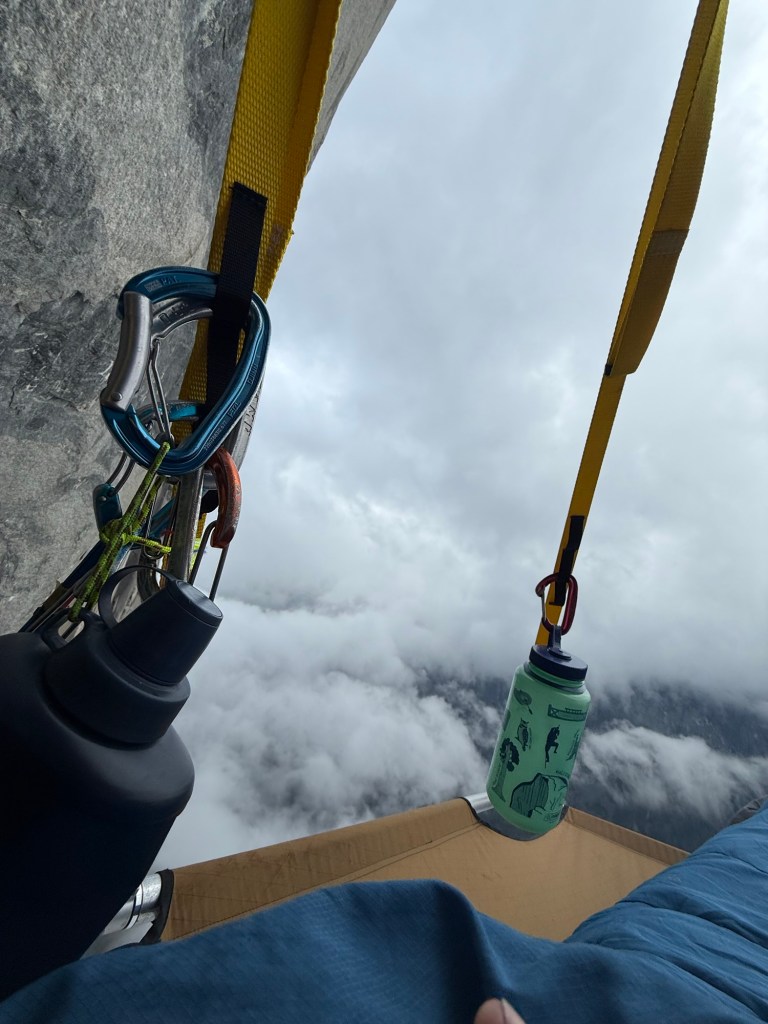
Today was fucking intense. Woke up to terrible weather and a negative headspace. Thoughts of I couldn’t do it, maybe the group behind me will fix my line for me. Will I have to call for a rescue if I fall on the hooks and break the rivets? I can be such a bitch sometimes.
I looked outside and was enveloped by clouds. It was so cold I was certain it would snow, not rain. That’s a positive I guess. That would later prove to be true. I laid in be for nearly 2 hours just stewing in negativity until I just got up and started breaking down camp. Not sure why. I hadn’t made some grand decision of what to do. I just started acting out of habit I guess.
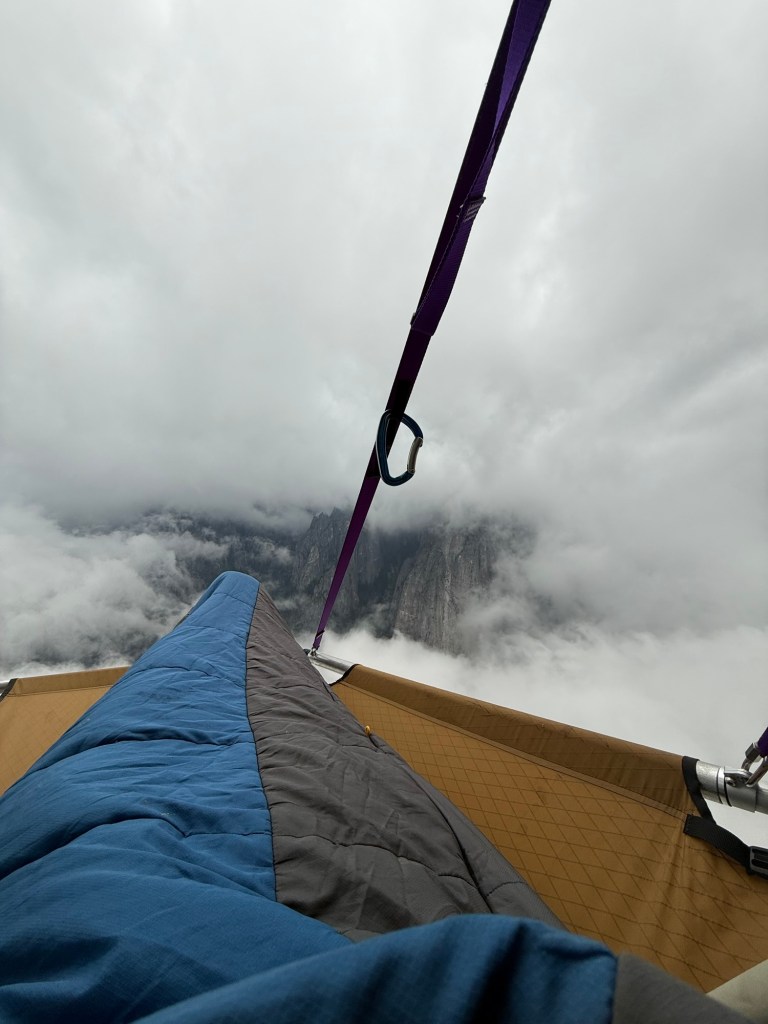
Before long I was questing up a sea of rivets in the middle of a cloud. I would later see some breaks through the clouds. No one else was climbing on the mountain. Everyone else was either hunkered down in their ledge or bailing.
I went back to tagging the bag, which I had stopped after the last incident where it wouldn’t come up. I was hoping to be light for the hooking so I could get higher in the ladders. I spent so much time making sure the belay was perfect and the bag would clear everything smoothly. As I neared the end of the rivets I pulled the bag up and it came without issue. As I was setting the bag back up on the rivets I heard a crash to my left. I looked over and saw my ledge had somehow escaped from behind my haul bags. The wind was ripping and the ledge was thrashing around like a wild animal. I watched it for 5 minutes or so just dumbfounded, but there wasn’t anything I could do about it. I could either rappel off the rivets (no thanks) or simply finish the pitch and hope for the best. I expected to come back to a shattered ledge and nowhere to sleep when I returned.
I quested off into the hooks, about 25-30 feet of just hooks before gear in the bottom of a roof. I placed each hook deliberately, slowly, and carefully. The second was particularly frightening as it was on a narrowly attached flake of rock. Before I knew it I was to the roof and I slammed in a blue totem, quickly followed by 2 additional pieces, essentially making an anchor mid pitch. Holy shit. I did it. I looked down and the positive vibes were dampened watching my ledge still thrashing about like a wild maniac trying to be free of the confines of the wall.
Before too long I reached the belay. I had planned to link the pitch straight to Peanut Ledge, but wondered if I should go down to get to the ledge. It’s probably already broken I thought. All the more reason to get to Peanut. I fiddle fucked for a while but couldn’t even figure out the first move off the belay. Fuck me. I hammered in the smallest beak they make and bounced it as hard as I fucking could. Please fail I thought, I don’t want to step up on this thing. It held. Fuck.
I felt the ledge tugging at the haul line on my waist. I pulled the rope and it was pulled tight. I had to go back. I no longer had a choice in the matter. I left the beak where it was. That was a decision for tomorrow I suppose. I rappelled back to the belay.
When I arrived at the anchor the haul line and the ledge were so tangled I couldn’t pull myself in on the knot attached to the anchor, but instead was pulling on a knot caught up in the ledge. I spent an hour or so un-fucking everything. The ledge definitely took some damage, but it’s intact and fared pretty ok everything considered.
My phone is dead and I’m out of power. Theres rain in the forecast the next two days, but I don’t know exactly when. I think the group behind me bailed, but I can’t be sure. I feel half on the edge of disaster and half pretty much done with this thing. Do I make a dash for the summit through the storm or do I just sit and wait for the sunny skies to return?
I’m running tight on food but I have to get by I think. I can’t communicate with Maria to let her know I’m alive. I’m sure the next few days will be rough for her. I’m a little nervous for myself, but I think I’ll be ok.
I’ve been having this issue where my right hand goes numb and when I close my hand it feels like the ligaments in my wrist are going to explode. That feeling goes away when I’m climbing but probably only because my brain is so overstimulated with the constant fear of disaster. I don’t know what time it is. I barely know what day it is. I’m going to try and sleep and hope for an ok morning to get to peanut.
5/27 Wednesday?- Peanut Ledge
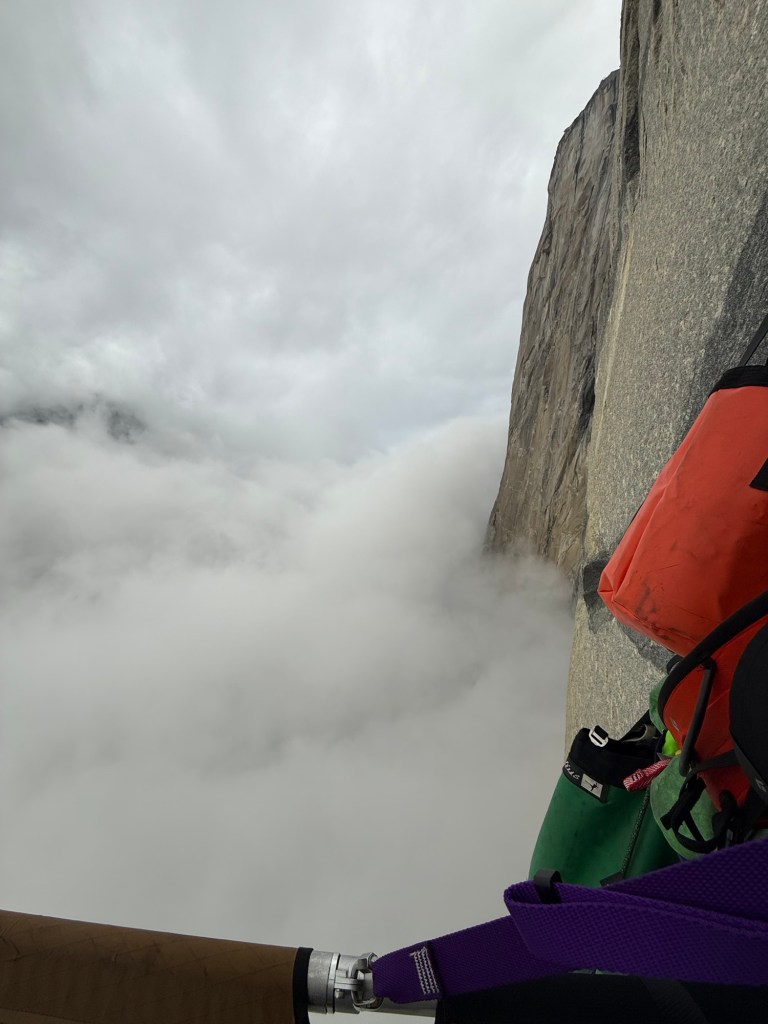
I almost had nothing to say. It was a ho-hum dreary rainy day. I beat the rain. Finally made it to Peanut Ledge, The end of the The Shortest Straw. 3 more pitches of Zodiac to the top. I hung out in the ledge this afternoon. Waited til dark to make my dinner. I had hoped to use the hot food to warm up my toes. I pulled out my lighter to light the jet boil. It doesn’t work. That’s ok Tony, you brought a spare. Yes I did. And it broke in the haul bag. Fuck me. Dessert with cold water for breakfast and Dinner is all I have left. FUCK!
Thursday-Saturday (5/28-5/30)
That’s the end of the journal entries unfortunately. I spent all of Thursday laying in the ledge as it rained the entire day. That night the zipper to my sleeping bag broke and I shivered my ass off all night. I was running out of food, was bored out of my mind, and was freezing cold. I was fucking over it. I wanted off the damn mountain. The next morning was another late start as I woke up in a cloud again. I didn’t know what the forecast showed, but it seemed like another storm day in front of me. I needed to get off the mountain though and so I just started up without really having a plan.
The first pitch went down relatively quickly and so I just mindlessly continued on. The next pitch went down and the sun began to set. I continued on. Vinny had climbed the last pitch when we did Zodiac so this was new terrain for me. It was only graded C2 so should be relatively easy compared to what I had done in the last 2 weeks or so. But alas I took one final fall in the middle of the pitch. Another daisy fall that took the air from my lungs.
I reached a roof near the end of the pitch, and my headlamp began to dim. I knew I was supposed to go right, but I didn’t see the next placement. I looked left and saw a finger crack that went up and left. I knew I needed to go right, but I’m a stupid fucker sometimes, so I went left. After placing two pieces I knew I had fucked up. No one climbed this fucking crack. I began back cleaning pieces for about 30 feet so that I wouldn’t have to come back this way. One final awkward free climbing mantle, risking a 60 plus foot fall if I blew it, and I was back on flat ground. A sudden and dramatic change in landscape where I had escaped the pull of the gravity that had tugged at me for the last 12 days.
I wandered downhill about 30 feet to the anchor. I was about 3 moves away from it when I decided to go left. Dumbass. I had to rappel back down one last time, back over the edge of the mountain. By what I imagine was about 230 in the morning me and all my stuff were on top and I collapsed in a pile. I had abandoned the two pieces that I left out left. It will be someones lucky day when they find those. I couldn’t be bothered to go back to get them.
I felt a deep fatigue in my body and mind. This had been both an arena to test myself as a gladiator, and a temple to worship and practice my religion. I had cried deeply, found immense joy, and been utterly terrified. I was unsure if I would succeed, and was proud of myself for having done so. But I was ready for a pizza and a coke.
The next morning came quickly and I got right to work packing up 3 bags to be shuttled down the mountain. I had contemplated hiring porters to get down. With my phone dead I was unable to contact anyone and had to do everything myself. It was for the best. That’s how a solo should be. The descent was a slog, but before I knew it I was back in the valley. Back amongst the crowds of tourists, looking for a place to park, which can be difficult on a Saturday. I crushed a Sierra Smash Burger at the Bar 1899 and wandered back to Camp 4. The storm had cleared and the clear skys had returned. I left my rain fly off my tent and stared up at the stars that night. I found myself dreaming of being back on The Captain once again.